


Kwanzaa: A Regeneration Celebration -
It's Not About Religion, It's About Culture
"Can white people celebrate Kwanzaa? Of course they can, as long as they are willing to celebrate African people and African Perspective," said host Semsut Olabamidele Husbands Hart. I found that statement powerful as I watched Black & White people sit side by side to embrace this cultural experience and appreciate African customs and tradition displayed at the Apollo Theatre at Kwanzaa: A Regeneration Celebration event.
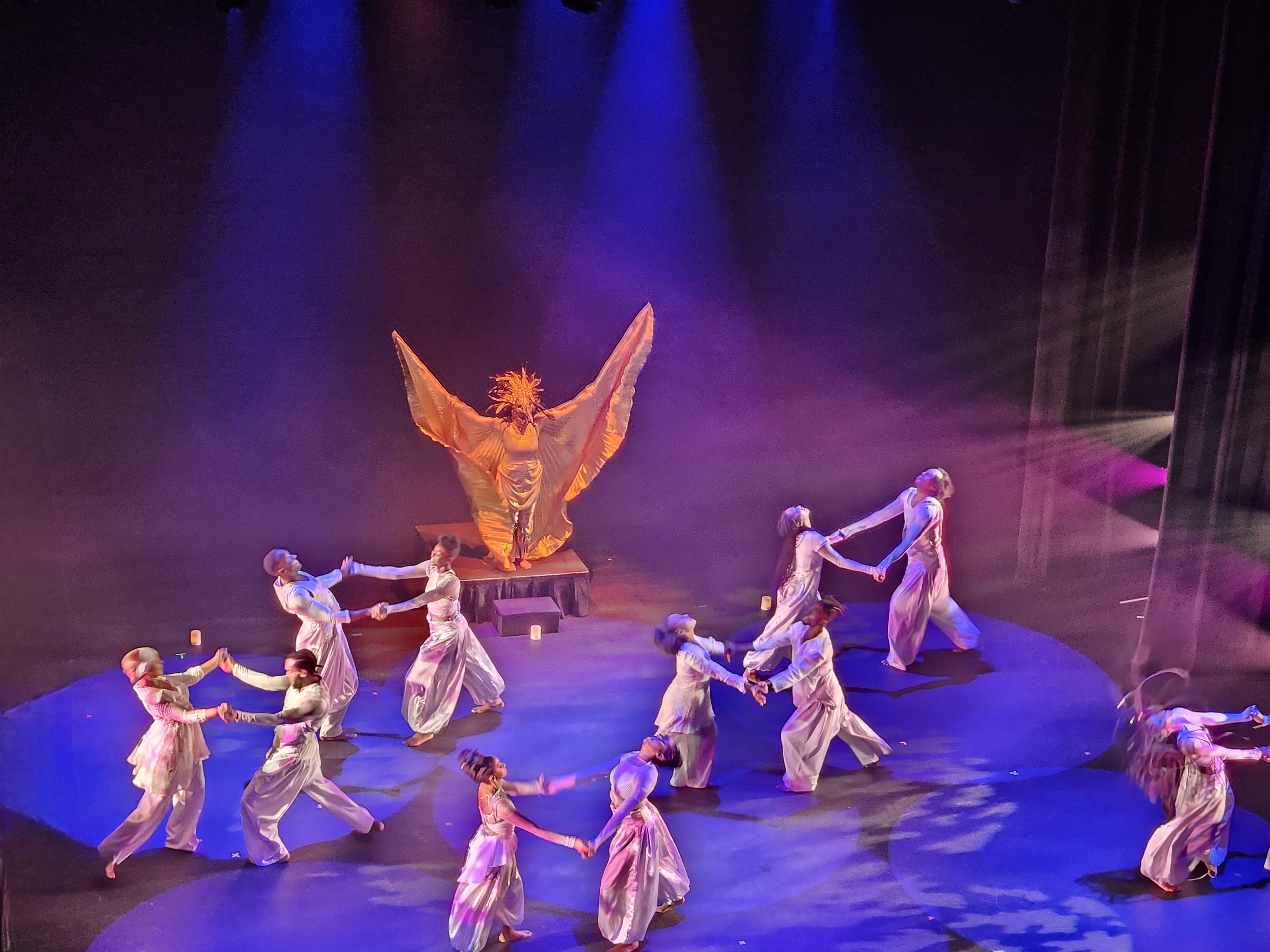
Kwanzaa is not a substitution for Christmas nor a religious holiday, but a tradition created to unify black communities after the LA Watts Riots in August of 1965. The Watts Riots, also known as the Watts Rebellion, was a six-day destruction within the Black Community as a response to a suspicion of excessive force by an officer to African American 21-year-old male, Marquette Frye. This woke up and shook up community activists near and far, including Martin Luther King Jr. The riots were a way for the community to express its frustration (which also plays out in present day). Still, the political aftermath felt like much ado about nothing, while the community destroyed the very place they had to live. One man tried to find a productive way to raise his voice and created a tradition that would unite people in a time of hopelessness and powerlessness. That man is Maulana Karenga, and that tradition is what we call Kwanzaa.
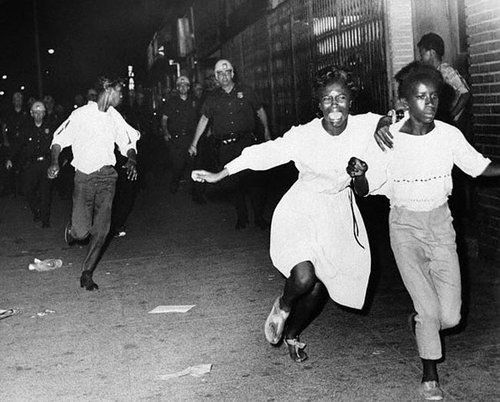
 Harlem has been considered the hub of Black excellence since the Harlem Renaissance. It harbors the world-famous Apollo Theatre, so it's only fitting that the Apollo Theatre celebrates this tradition to unite people and communities, bringing pride to Black people. On December 30, 2023, the lights went down, and host Semsut Olabamidele Husbands Hart, draped in White linen attire as the older women of Africa would often be seen in, came from behind the red curtain to introduce the show. Her on-time humor, information delivery in an entertaining way, and ability to keep the crowd engaged, made her a fantastic host for the Kwanzaa: A Regeneration Celebration event. 6 min. read
The program began with an intense drum introduction by the musicians, emotionally transporting you into the villages of Africa during a ceremonious event. The dancers appeared in colorful attire, setting the stage for the jubilation that was about to take place.
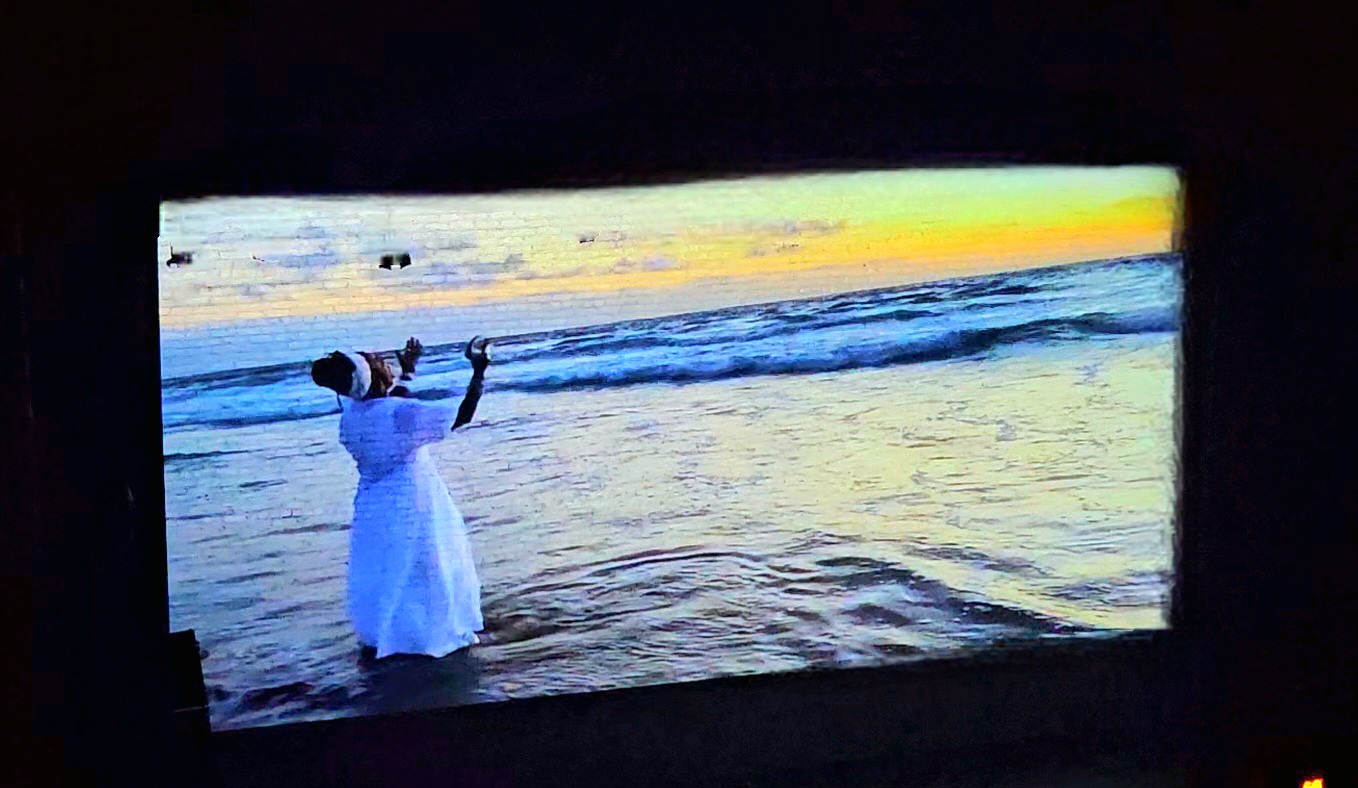
We were then immersed in calmness and reflection as a short video of a Black Elder woman dressed in all white played on the projector screen. A voice-over that paid homage to the ancestors filled the room as we watched the Elder leave her footprints in the sand and dip into the ocean fully clothed. This immediately made me contemplate what the sea means to people of African descent. It was a means by which they were crossed from their native land into slavery; it was a means by which thousands jumped to their death or got thrown into the ocean if they died before reaching their destination. But the ocean, for the African community, is also a symbolic place for healing and restoration and a place to meditate and become one with nature.
Just before I can get too in my feelings, we are transitioned into the next performance. It begins with a dancer adorning Gold Isis wings and a Bird mask. After their solo over nature sounds and a low vibrational frequency is complete, it's met with an opposite emotion of dancers emerging with robust and fierce hip-hop moves. If you can split your attention between the hypnotic choreography and the music, you will realize that the lyrics are a tribute to the soldiers we lost in the hip-hop community, mentioning everyone from Heavy D to Nipsey Hussle. We were then taken from hard-hitting to flowing choreography as dancers dressed in all white took the stage, and the music presented us with a "Come to the River" type song where we could gather and praise.
The choreographic metaphors elevate as Choreographer Abdel. R. Salaam provides us a piece called "Fallen Idols?....Wall Street 3.0." This opens up with dancers dressed in 3 piece suits, equipped with briefcases and laptops, expressing the stress of the Corporate world enhanced by the protest of the black community, for being innocent casualties in the chase of the almighty dollar. It is set to high-powered house music as dancers mix modern dance with ballet and even voguing. The acting is just as crucial in getting the emotion across to the viewer, and if you are familiar with the infamous Black Friday Wall Street Crash, you would know they did the story justice.
After two excellent pieces by the Forces Of Nature Dance Theatre, it was the youth's turn to show up and show out as the Harlem Children's Zone Youth Academy Of Dancers took the stage. With a mash-up performance of Hip hop, Crunking, and acrobatics styles, they showed they are the wave of the future. High energy, fast-paced choreography didn't bother these young people; they left it all on the floor and showed us who's next.
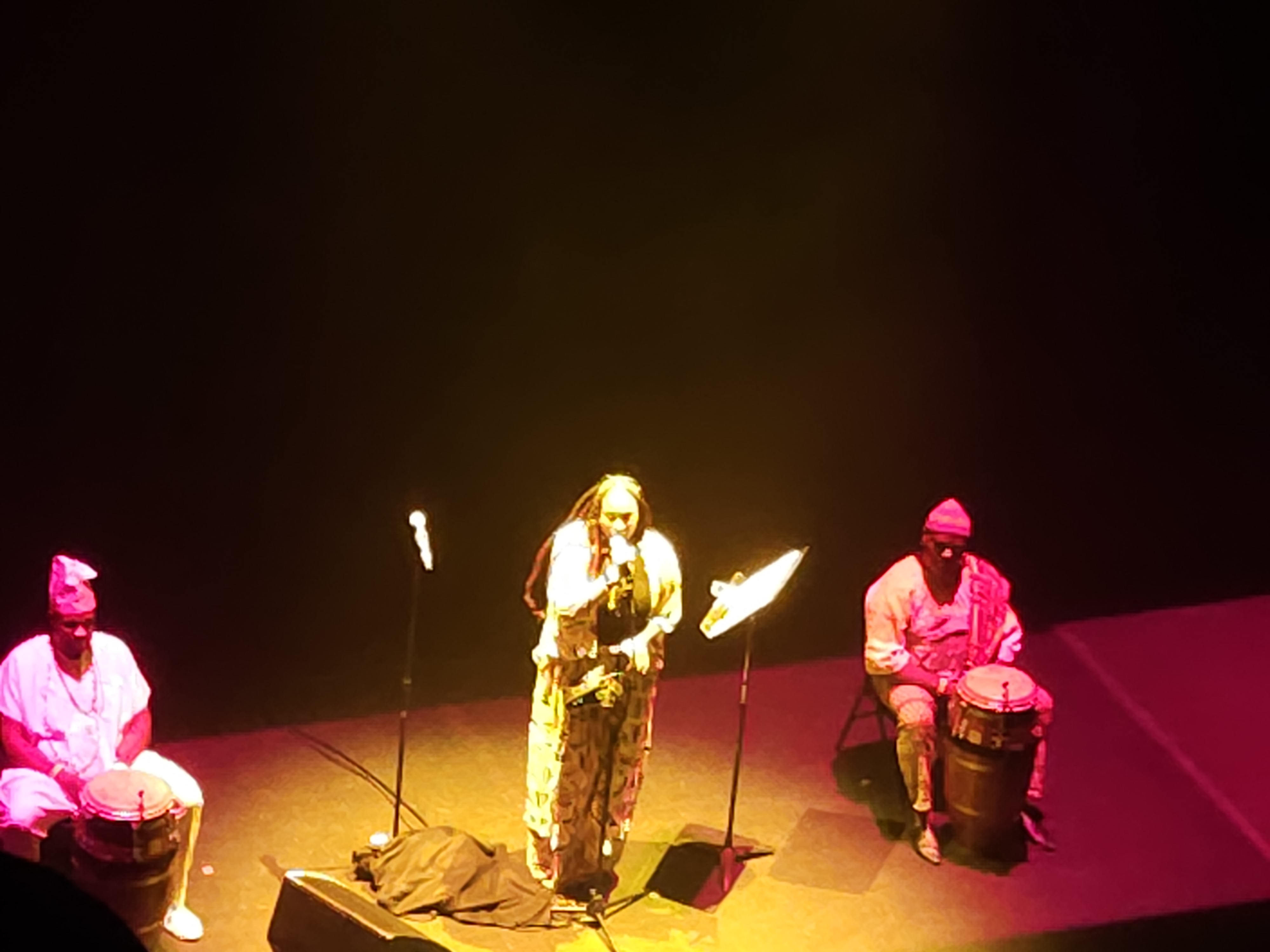
We took a moment from dance performances to usher in a poetic vibe with Mumu Fresh, a female artist using spoken word, mixed with melodies and rap as storytelling tools to take us through her journey as a black woman and mother. She was accompanied by two drummers by her side as she painted pictures with her words that left the audience feeling stronger and prouder to be Black.
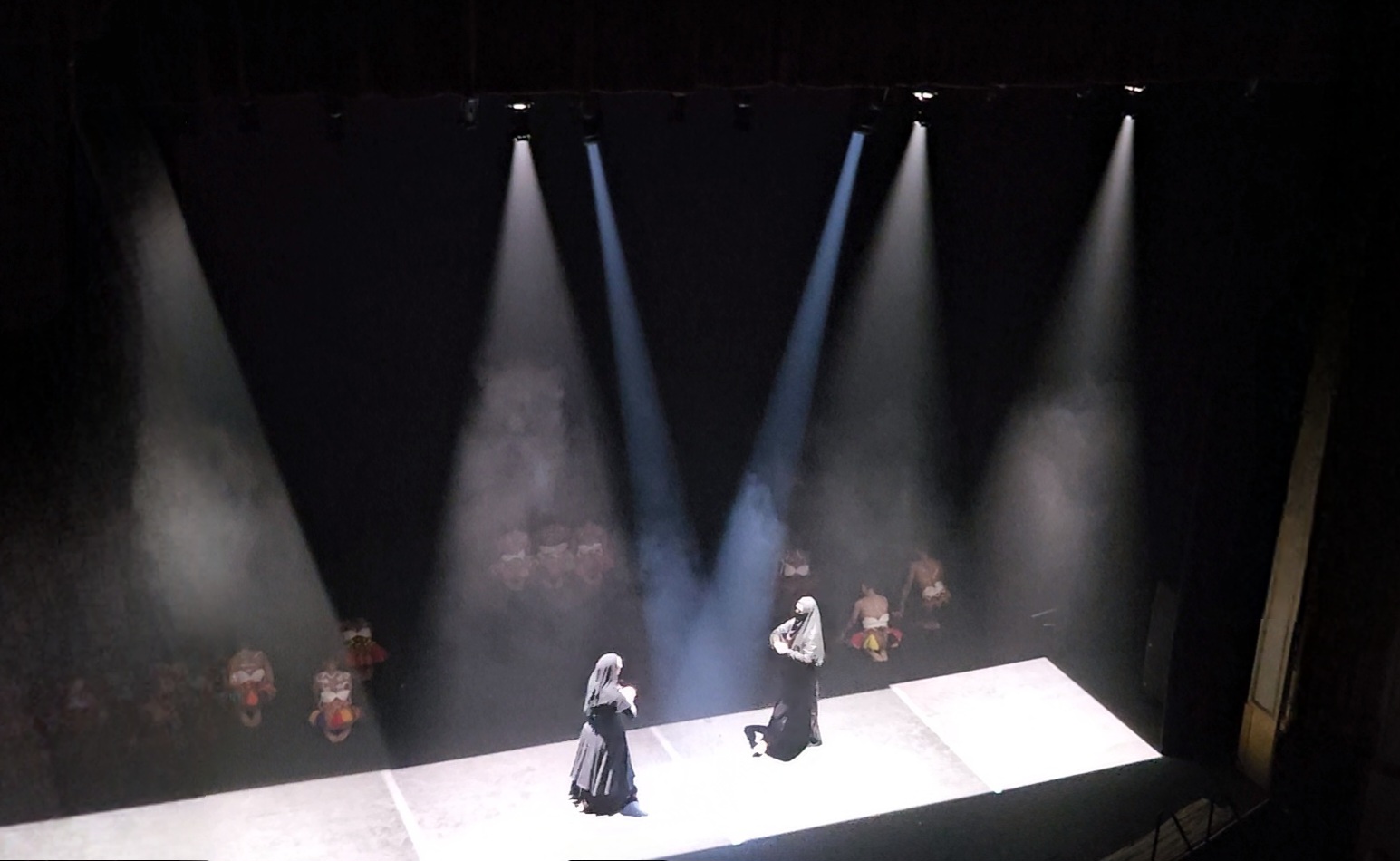
The program filled with principles of Kwanzaa came to its crescendo with a thought-provoking final piece entitled "A Question Of Modesty." The host so eloquently provided a synopsis of the piece explaining that we were time traveling to the Middle Passage and embarking on a journey of African customs and traditions being invaded by Islamic and Christian Beliefs. She wanted us to understand the pain of being stripped of your culture just for others to impose their beliefs onto you. For your personal identity and perspective to be disregarded for others' gain. She wanted everyone to keep in mind during the performance that in the present time, what the black communities need and want is for their voice to be respected and heard, not dominated and controlled. And oh did this piece deliver!
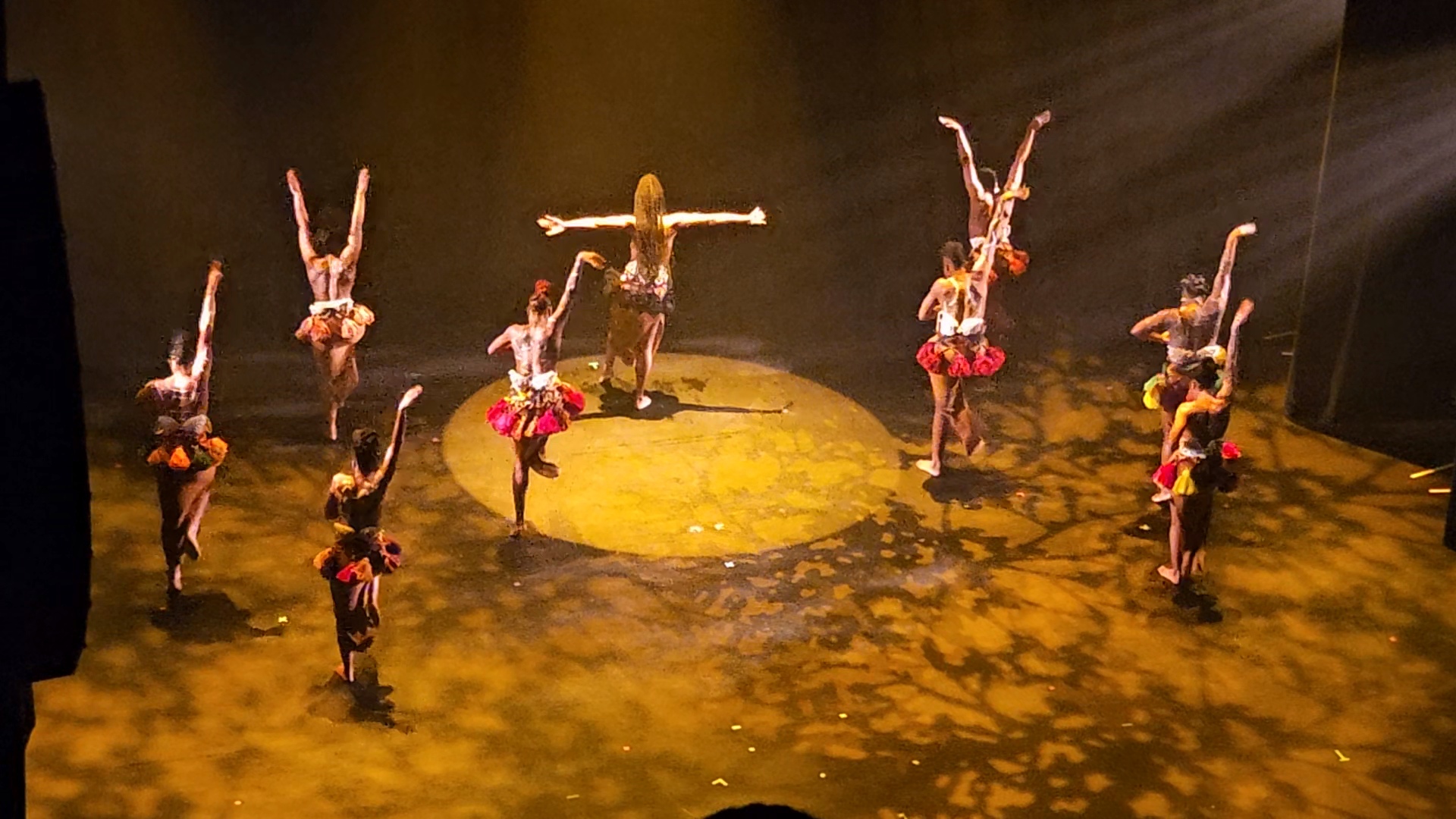
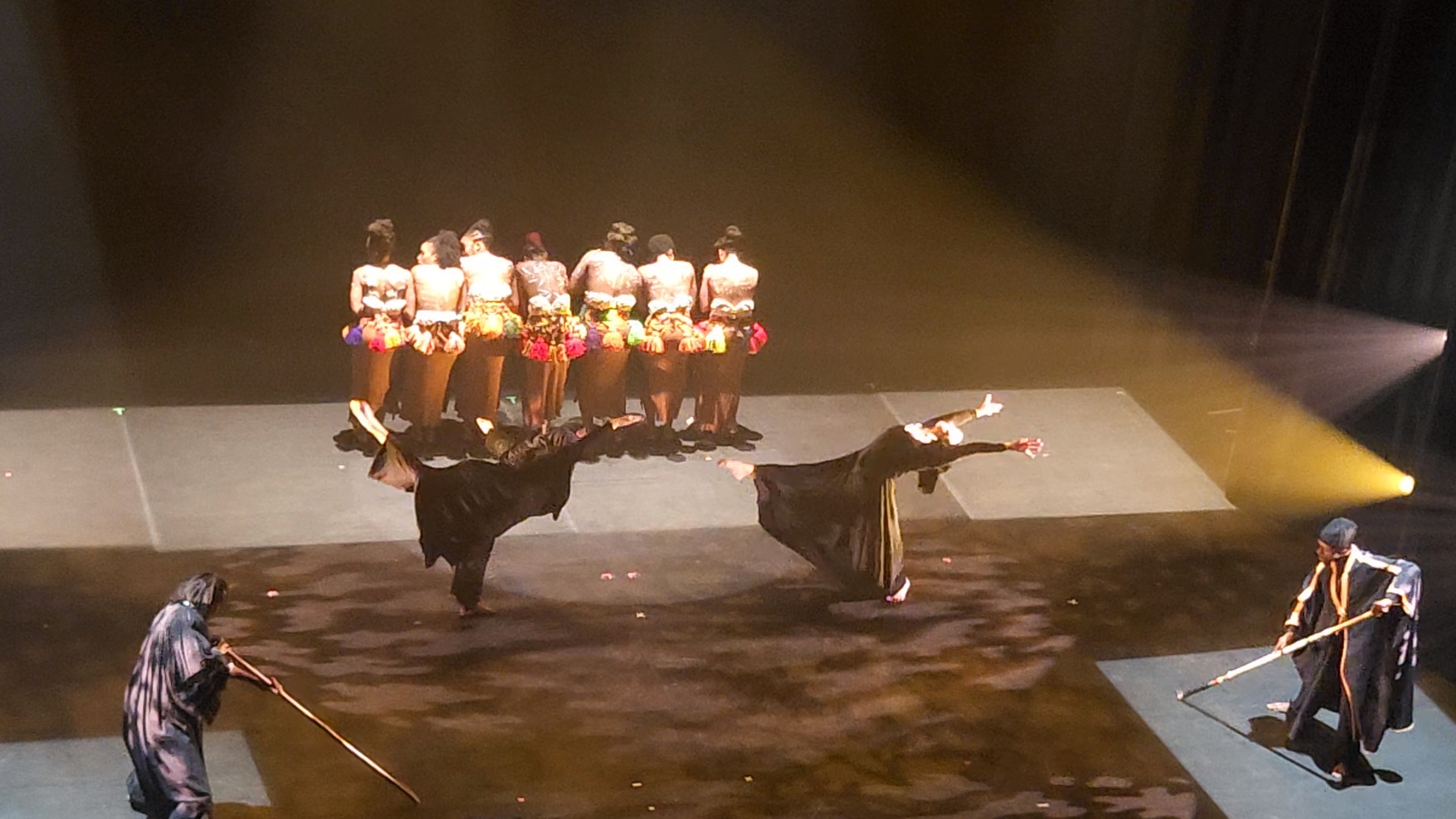
It starts with a white spotlight on 2 women dressed in Muslim attire crossing paths silently across the stage. Once on opposite ends, they disappear into the darkness, and a yellow spotlight hits 3 women with their backs toward the audience. They dance in unison topless to represent the appreciation of a woman's beauty in African culture beyond the over-sexualization of a naked body by Western culture. More dancers join the three on stage, topless as well, as the first half of the dance gives the feel of a community enjoying their freedom through an expression of movement. Suddenly, two men in Preacher robes and two women dressed in Muslim attire cartwheel and Pas de Bourree Turn onto the stage.
Here, the covering of the women begins as outside perspectives are indoctrinated into their culture. You feel the submission and bondage imposed on the women as a Chief sits in the background. Just as the takeover is about to set in, he jumps into the circle and begins to dance, signifying the fight back to keep his culture intact. Slowly, the other dancers join the Chief. While their breasts are no longer bare, they dance harder and fiercer to the drums to symbolize their fight to keep their traditions alive amongst the integration of outside voices.
 The whole journey leaves me in tears as the message is perfectly executed, forcing me to reflect on the fact that I have been robbed of experiencing African customs and traditions throughout my youth. It left me pondering what it would be like if that was a part of my life growing up, wishing I had visited Africa every summer like I would stay with my aunt in the Poconos during school break. Who would I be? How would I think?
And here, in this moment of thought, lies the importance of Kwanzaa. It allows Black Americans to get in touch with their roots positively. It also allows other races and cultures to learn more about Africa, and even though Umoja focuses on the unity of the Black community, it also advocates for the unity of the masses.
This event has been on display for 18 years at the Apollo Theatre, and I encourage everyone to find their way to this fantastic event in December 2024. You won't regret it. Even if you can't make the event, implementing Kwanzaa as a yearly tradition that carries a positive mindset into the new year can only benefit the community. For more information about this event, visit Apollo Theatre's website.
On this last day of Kwanzaa and the first day of the new year, I implore you to walk in the principle of Imani (Faith) and don't limit your Kuumba (Creativity) because that's what makes you unique to carry out your Nia (Purpose). Doing so will allow you to contribute to the Ujamaa (Cooperative Economics) principle, assisting in creating Ujima (Collective Work & Responsibility) in your community. So look within to find your Kujichagulia (Self-determination) and promote Umoja (Unity) in your circle, which hopefully will have a ripple effect on the masses.
“Habaragani?!” (What's the News?!) Designed2.create.org is where you will find it! Be sure to follow us on Instagram and subscribe to the website! Peace and Blessings in the New Year!
Watts Riot Photos courtesy of https://kentakepage.com/the-watts-riots-of-1965-an-uprising-against-an-oppressive-system/