
BLACK PANTHER: WAKANDA FOREVER - THE TAKEAWAYS (Let's Talk)
Editorial Piece
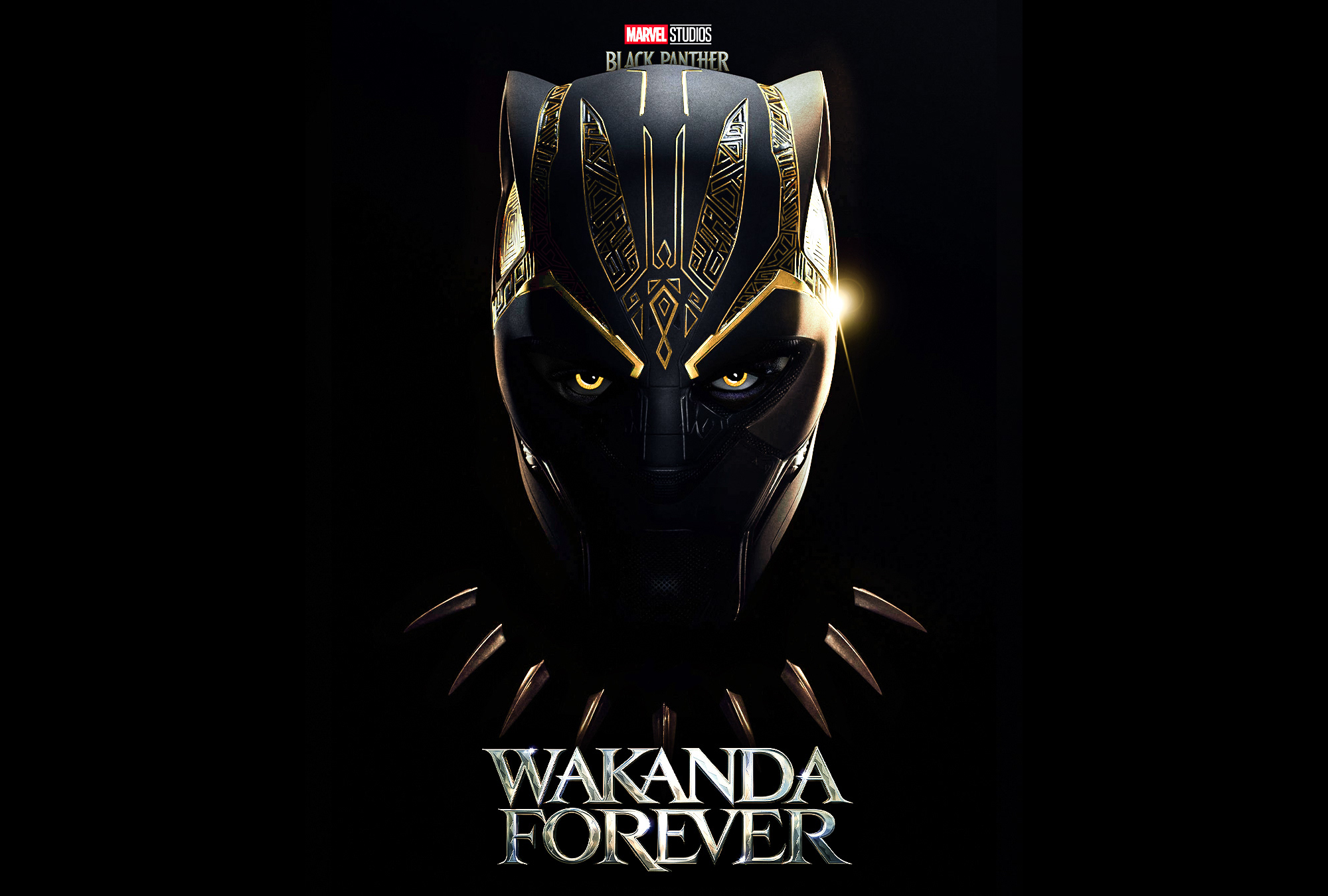
Black Panther, the Comic’s first movie installment, had moviegoers adorned in headwraps, Kente Cloths, and a new greeting in the Black community: Arms crossed over your chest, fingers in a fist, and head bowed. We left that theater feeling a sense of pride, a sense of unity, and a feeling of representation.
On the heels of the star Chadwick Boseman's death, the anticipated sequel had some big shoes to fill. Ryan Coogler had to adequately execute the movie in memoriam of Boseman while simultaneously fitting the Marvel template, being entertaining, sustaining the regal portrayal its supporting community was inspired by, and sending a message of hope that the thought of a real Wakanda brought.
Armed with my 3D glasses, I was ready to be propelled into an abyss of fantasy that provided a desire that life would imitate art in some ways. But first, let me be clear, this article is not a spoiler, but a real-time assessment of thoughts that swirled in my head once the screen went black and the curtains closed. 5 minute read
Black Panther: Wakanda Forever comes at a time when frustrations are running high in the Black community. Feelings of oppression are not white noise in the background but front and center. The 3-hour cinema kept my attention and provided a visual break from news on elections, gossip, and social media, but I couldn't escape how my own mental space played a part in my perspective of this film.
Depending on if you are going for pure Marvel action, to support the Black community, or to pay homage to Boseman, you may have a different feeling about the movie. Now, I will admit my tears were often misplaced from the scenes I was watching. These women were kicking ass and I was crying. Why?! Feeling powerless at times when it comes to issues of my people, I desire to be a part of the change I want to see, and there are moments that it feels my efforts are a mere pebble drop in the ocean with no ripple. Inspired by the likes of Angela Davis, Maya Angelou, and Shirley Chisholm, I was experiencing the duality of pride and sadness as I watched these fictional Melanin skinned female warriors protect their land, defend themselves, and display a level of intelligence that was unmatched.
This leads me to the first thought I want to tap into, the concept of female leadership. After the beautiful mourning ceremony of T'Challa, Angela Bassett appears to us again in all her poised, elegant, yet stern glory amongst the council of the United Nations, warning them that Wakanda was well equipped to handle any attacks, despite not having a King. Many immediately assumed this country would be weak without a man in authority. Those who did not think so, were the people themselves. Even our strongest and beloved warrior, M'Baku, acquiesced to the desires of the Princess, acknowledging she was no longer a child. Although he would give her council, ultimately, he trusted her word on actions to take as a leader.
In today's society, we see quite the opposite. Women without husbands are viewed as defenseless and having less value. Women in positions of power have to fight for respect between being objectified, pacified, or even disregarded by their male counterparts. We assume the woman serves best as the backbone while the man takes the front stage in leadership.
When Hulu Original Handmaid's Tale first aired, women wondered if we were getting an inside look into the future of a world where the quality of your life had nothing to do with your abilities but with having a protector, a man. Women were in consternation at the thought of having their money, bodies, and voices fully controlled by the patriarchal system. Fast forward five seasons (years) later, and the low-hanging fruit to shame a woman is to solely speak on her competence to keep a man, take care of a man, and be desired by a man, regardless of who she is and what she has accomplished as an individual. So, women, I appeal to you, be careful of the mindset you are carrying. It is not always men who are pushing this narrative. Male-identified women are doing the same.
The second note I want to hone in on is the Colonizer effect. Wakanda is met with another civilization, Talokan, that's just as special as theirs, especially regarding resources. In continuance, the United States's M.O. was to find ways to invade the territory and retrieve the treasured Vibranium. The fear of being conquered by the U.S. caused Namor, King of the Talokan Underworld, to push Wakanda to help them fight. But because it was not done with respect but intimidation, Wakanda didn't take well to it. This eventually leads to them fighting amongst each other while the common enemy continues to plot on them. This felt very similar to what we deal with now. The Black & Brown community feels the heaviest burden of racism in America; however, instead of pulling our resources together to fight the system, the social constructs have led us to act more like crabs in a barrel.
I saw reviews of people complaining about this portion of the storyline. That it was antiquated and pushed a feeling of hate toward white people. I find it interesting that we have had years of Hollywood driving the imagery of drug dealers, children gang bangers, and over-sexualized black women under the notion of representing the inner city and showing the world what is happening in Urban America, but a movie depicting the U.S. need for greed and power and civilizations fearing being conquered by them, is a tired narrative, when this too is a representation of struggles in Urban America. I say to those who feel offended by the undertones of fear of the colonizers in Black Panther, the truth offends those on the wrong side of history.
We are living in a time where books are being banned, the critical race theory is a staple in political debates, and people are fighting to have history taken out of curriculum that would make white students feel uncomfortable, while black children are treated as adults when it comes to exploitation, jail sentences, and police encounters. Part of the problem is the Black community does not feel the remorse of the United States for what was done to them, and when given the chance to have a say in the story being told, speak their truth.
The third thing that I want to touch on is Culture & History. Black Panther opens up with a ceremony and dance sequence that put me in the heart of African traditions, and follows up with the custom of speaking to the ancestors to gain knowledge and strength for obstacles they will face. In one scene where M'Baku is consoling Princess Shuri, he makes a point to tell her to do a proper burial like her ancestors and not to let technology get in the way of this sacred moment. We know Shuri is a tech wiz, a modern girl with a swagger like she’s from New York or Philly, but her elders made sure that despite her intelligence and advanced ways, she holds on to her core, her roots. M’Baku understood although things may eventually be done differently, never forget where you came from. That is where a sense of self is derived from.
As a Black American, I often feel like I don't really know what the culture of my people is. I can give surface responses, but when I think about it, do I really know about my ancestor's beliefs, traditions, and history? Again, yes, but on a surface level. Black American & African history, as we know, has been omitted, revised, hidden, and even demonized. Many of us need help understanding our ancestors' culture, roots, and practices. We can’t depend on the American educational system to teach it to us, so we must seek the truth for ourselves, trying to decipher what is true and what is not. Although Wakanda is a place of imagination, I fantasize that the livelihood, rituals, and technological intelligence of ancient Africa shared similarities, as I seek to understand civilization secrets embedded in Egyptian hieroglyphics.
In light of what the Black community is currently facing in America, I went to this movie wanting to walk out cloaked in pride and excitement. I did leave with pride, but also with a lump in my throat and questions in my head.
Black Panther: Wakanda Forever was well executed, taking me for quite a few unexpected turns just to drop me off exactly where I thought I would be. As the movie ended, I resisted the urge to jump out of my seat and scream, "Wakanda Forever!" but I just sat there and admired the cast of beautiful people.
I was pleasantly surprised to see that part of the movie was filmed at Tyler Perry Studios as the credits rolled out at the end. I believe there will be mixed reviews for this movie, but no matter how you rate it, it's Wakanda Forever for me, respectfully.